The on-screen portrayal of schizophrenia – particularly in horror films – has largely seen the mental health condition linked to violent and unpredictable rages, showing people that something is terribly wrong.
According to British filmmaker Billy Lumby (BAFTA nominee for his short film “Samuel-613”), this “misrepresentation” was part of the inspiration behind his debut feature “Florid,” which had its world premiere at the San Sebastian Film Festival.
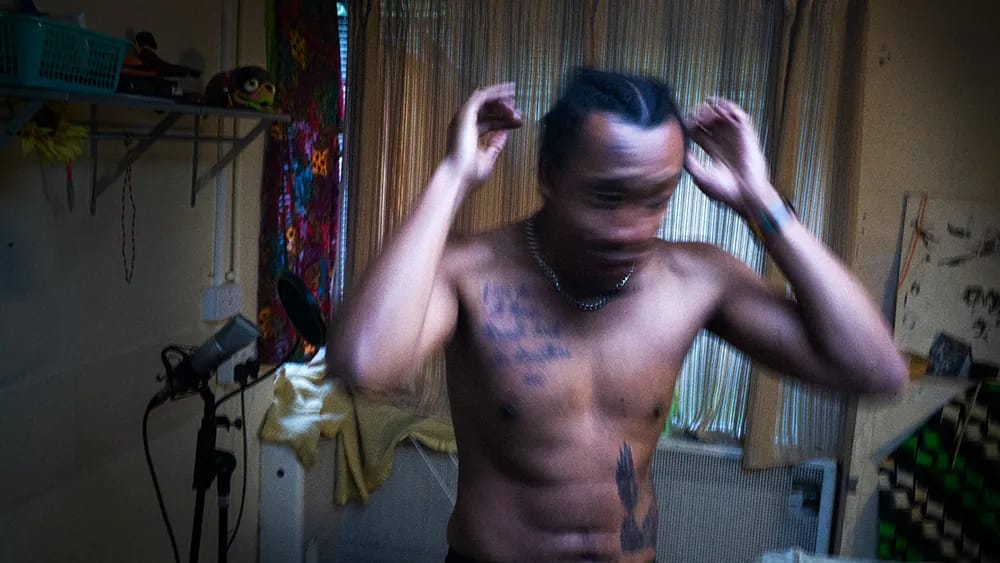
Also drawing on Lumby’s own mental health experiences, the film follows young Jamal, who hears voices (Lumby says he prefers the term “schizophrenia”) and tries to balance the medication he must take with marijuana consumption. Living in supported housing in East London with others with mental health problems, Jamal finds himself increasingly alone and isolated; The voices in his head relate to past family events, only intensifying when he decides to pop his pills.
While the story doesn’t culminate in the violent depths seen in the cinematic tropes that Lumby deliberately tries to avoid, it’s a compelling watch. But this is largely due to the auditory sensation provided by the sounds, which become louder and more distinct as the film progresses, pulling Jamal down with them.
Carrying “Florid” as Jamal is Jonathan Jules, known for his first starring role in Steve McQueen’s “Small Axe.” “It is not easy to act authentically and accurately in a mentally unstable situation,” Lumby notes.
During filming, Jules wore headphones on set; the actors were speaking into microphones in another room, so they could hear the voices live and respond unrestrictedly. “There were little moments where his eyes were twitching—it just felt so real,” Lumby says. Once principal photography was completed, months would be spent in post-production amplifying the sounds to establish the right tone and incorporate them into the overall soundscape.
Jamal heard three voices, further complicating the editing process. There is a little girl who represents his self-worth and who is highly critical of him. Then there’s the voice of real-life rapper Unknown T, which excites him. “That’s the grander side of it, boosting his ego and making him think he’s got big things going on in his life,” Lumby says. But most devastating is the voice of Jamal’s stepfather; This voice is a negative, paranoid voice that tries to persuade him to doubt the intentions of those around him.
“When you’re well, you can ignore these things, and it’s like a little anxious thought in the background,” says Lumby, who was heavily inspired by the Hearing Voices Movement, which rejected traditional psychiatric views that such voices were merely hallucinations to be suppressed with medication. Instead, he argues that they can be a valid part of someone’s identity and history and cannot always exist as a negative experience.
Jamal Jules in ‘Florid’
Although Lumby says there are definite “autobiographical elements” in “Florid,” he went to great lengths to achieve greater authenticity. As part of years of research on the UK’s National Health Service and mental health system, she traveled to psychiatric wards across London, followed social workers and interviewed those with mental health experience, as well as their families and carers. Lead actor Jules spent time in the NHS, playing his co-star Saskia Chana, who plays another resident of supported housing and potential love interest. But most other roles were given to non-actors Lumby met during the extensive development process.
“We have real psychiatrists, social workers, real people with lived experiences, people diagnosed with schizophrenia, people with bipolar and severe mental health experiences,” he says. Jamal’s care coordinator is played by Claire Holman, a real-life NHS care coordinator who Lumby says “opened a lot of doors” for her in the mental health community.
Lumby claims that Holman and others from the mental health community wanted to get involved in the project because they, like her, were “passionate” about the subject, but also because they “hadn’t seen this issue properly represented or their lives shown before.”
The main goal of “Florid,” produced by Rupert Lloyd (Oscar nominee for “Theeb”) and Joy Gharoro-Akpojotor (“Blue Story,” “Boxing Day”), is “awareness,” says Lumby.
“I wanted to draw attention to an area of our world and our modern contemporary society that many people are unaware of,” he says, adding that mental health is the “most underfunded” area of the NHS.
“There’s a lot of stigma and misrepresentation, and I think the more we open up and discuss these things, the better. Not everyone may like my movie, but I hope it sparks some kind of discussion and debate around severe mental health. People talk about depression and anxiety, but I think in the case of severe mental health it’s still something that’s not fully understood.”