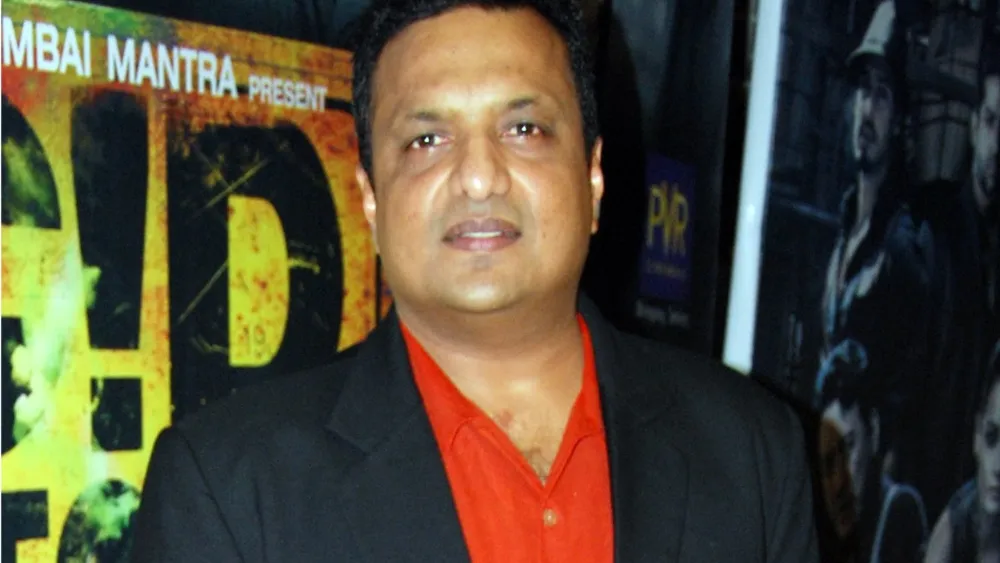
Indian film producer Sanjay Gupta, whose credits include the crime thriller “Kaante”, the gangster epic “Shootout at Wadala” and the Hrithik Roshan-starrer “Kaabil”, died after falling at his home in Mumbai on October 30. He was 59 years old, according to the Press Trust of India.
Director Milap Zaveri, a long-time friend of Gupta who worked on the dialogues of “Kaante”, confirmed his death to PTI. Zaveri said, “It is true that he died. He fell and hit his head.”
Police in Mumbai’s Versova district have filed an accidental death report. Deputy Commissioner of Police Purushottam Karad told the Free Press Journal that Gupta’s family members were sleeping when the incident occurred and they realized it the next morning. “The family did not raise any suspicions or file a complaint,” Karad said.
Gupta was one of the leading exponents of the glossy, action-oriented Hindi crime thriller, bringing a visual sensibility that owed much to Hollywood to an industry traditionally dominated by melodramas and musicals. His career behind the camera began in 1994 with “Aatish: Feel the Fire” starring Sanjay Dutt and Aditya Pancholi. He later directed “Ram Shastra”, “Jung” and “Khauff” and developed an enduring professional relationship that spanned 10 films, including projects produced by Dutt and Gupta.
The filmmaker had one of his biggest hits in 2002 with “Kaante,” which brought together Amitabh Bachchan, Dutt, Suniel Shetty, Mahesh Manjrekar, Lucky Ali and Kumar Gaurav for a Los Angeles-set heist thriller about a group of criminals planning a bank robbery. As Gupta recounted in an interview with Rediff the following year, the production was shooting in the city when the terrorist attacks of September 11, 2001 forced a change in location schedule.
The film’s similarity to Quentin Tarantino’s “Reservoir Dogs” attracted considerable attention, but Tarantino later expressed his admiration for “Kaante” in an interview published in the Times of India in 2007. Gupta received a Filmfare nomination for best director.
Questions about the influence of international films have dogged Gupta throughout his career, and he has made little secret of his willingness to draw inspiration from existing material. Responding to accusations of plagiarism in a 2002 Rediff interview, he said he would “beg, borrow and steal from any medium” in pursuit of a compelling story.
Many of his later films reflected this philosophy. “Musafir” (2004) had similarities with Oliver Stone’s “U Turn”; The Dutt and John Abraham thriller “Zinda” (2006) particularly attracted controversy due to its similarity to Park Chan-wook’s South Korean film “Oldboy.” Korean production company Show East told Star News in November 2005 that it was considering legal remedies if the completed Hindi film was substantially similar to the original. Gupta later directed “Jazbaa” (2015), an adaptation of the Korean thriller “Seven Days”, which brought Aishwarya Rai Bachchan back to the screen.
Gupta has also established himself as a producer through White Feather Films. The company’s works included “Shootout at Lokhandwala” (2007), “Acid Factory”, “Pankh” and the anthology “Dus Kahaniyaan”, which was also directed by Gupta. He returned to the gangster genre with “Shootout at Wadala” (2013), a prequel to “Shootout at Lokhandwala” inspired by S. Hussain Zaidi’s non-fiction book “Dongri to Dubai”.
In 2017, Gupta directed “Kaabil”, starring Hrithik Roshan as a visually impaired man seeking revenge in the film produced by Rakesh Roshan. His later work included the crime drama “Mumbai Saga” (2021), a T-Series co-production whose theatrical prospects were affected by the renewed surge in COVID-19 infections. His producing work also extends to “Visfot” (2024), a Hindi adaptation of the Venezuelan thriller “Rock, Paper, Scissors.”
Colleagues recalled Gupta’s contributions to the industry’s visual and promotional vocabulary. Rahul Dholakia, director of “Raees”, described him in
Director Kunal Kohli, whose films include “Fanaa”, recalled a conversation he had with Gupta just a few weeks before his death and their time together as award jury members. “You had many more films and many years ahead of you,” Kohli wrote.
Dutt wrote: “Gupts my brother. I still can’t believe you are gone. We shared so much together, so many memories and many years of friendship. You have always been family to me and that will never change. I will miss you, our conversations and all the times we spent together.”
Sound designer Resul Pookutty, who won an Oscar for “Slumdog Millionaire”, wrote: “What terrible and shocking news for me personally and for our friends and family. We have worked together for 25 years. I cannot handle this… We will miss you, one of the sanest voices of mainstream Indian cinema… May your soul rest in eternal peace.”
Beyond filmmaking, Gupta maintained an active presence on X, often offering pointed commentary on the creative and business side of the Hindi film industry. He had also begun discussing a possible return to one of his best-known properties. Following the resolution of a dispute between White Feather Films and Pritish Nandy Communications over “Kaante,” Gupta revealed on his “InControversial” podcast earlier this year that he was developing the basis for a sequel.
He said that the story of Kaante 2 has been prepared at a “very basic level” and that he plans to start writing the script.
Gupta is survived by his wife and two children.