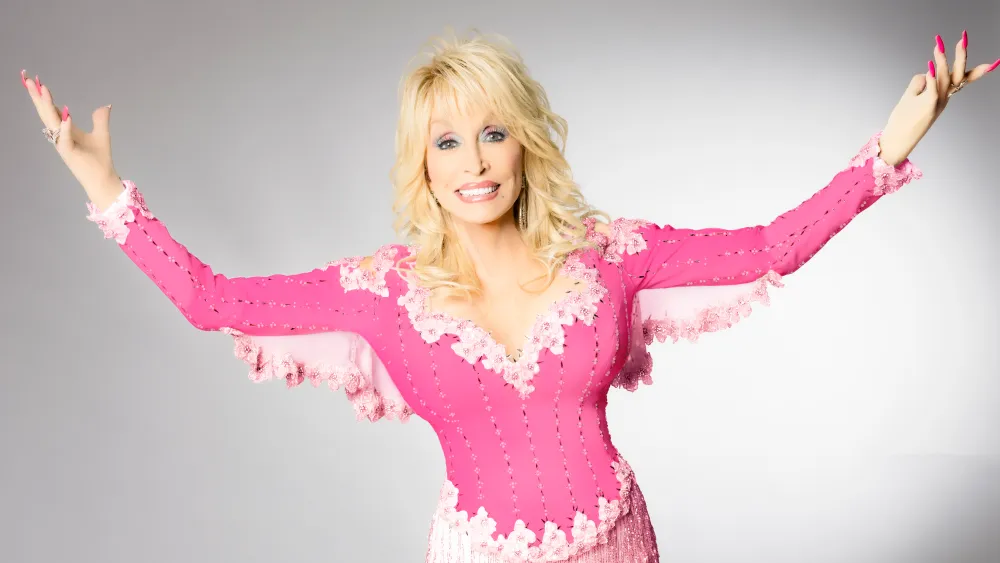
For actors, portraying a real-life person is a huge challenge. But portraying a real-life singer-songwriter-actress-icon like Dolly Parton when she’s standing right in front of you is a whole other realm.
That was the experience and the challenge for the actors and co-creators of “Dolly: A True Original Musical,” which previewed in Nashville last year and comes to Broadway’s St. James Theatre in previews starting on December 7, 2026, and opens officially on her 81st birthday, January 19, 2027. But while it was certainly a daunting task, it was a deeply enriching one for the people who have brought the musical to life.
Parton was there for every step of the process, right up until her death from cancer this past August, and was every bit as positive, charming and encouraging as her iconic image would lead one to expect, according to two of the actresses who portray her — Carrie St. Louis (“Just in Time,” “Rock of Ages,” “Kinky Boots”) and Katie Rose Clarke (“Merrily We Roll Along,” “Light in the Piazza”) — and Tony-winning director Bartlett Sher and lead producer Adam Speers. All four sat down with Variety’s Jem Aswad for an interview at Variety’s “Business of Broadway” event earlier this week.
Jem Aswad, Katie Rose Clarke, Bartlett Sher, Carrie St. Louis and Adam Speers speak onstage during the “Dolly: A True Original Musical” panel at Variety Business of Broadway presented by CNB held at Mandarin Oriental on October 05, 2026 in New York, New York.
Kristina Bumphrey
In vivid detail, they recalled their extraordinary and unique experiences with Parton as she helped them to shape her story and their depictions of her — complete with some of the most intimate and accurate Dolly impersonations the world is likely to hear. An edited transcript of this remarkable conversation appears below.
The show, which examines Parton’s career in three eras, was written by Parton with Maria S. Schlatter, directed by Sher and executive-produced by Speers (who previously worked with Parton on the London incarnation of “9 to 5”) with Parton, her manager Danny Nozell, and Gavin Kalin Productions. It has been trimmed down from its three-hour-plus Nashville incarnation, but the version that is coming to Broadway was overseen and approved by Parton herself.
Katie, Carrie, what sort of advice did Dolly give you? And have you ever had the experience of speaking with the person you’re portraying?
St. Louis No, and certainly not at that level! I remember the first time I had to sing in front of her. Of course, it’s so nervewracking because you want to do her justice and honor her, but also it has to feel truthful and real and not like a caricature. The thing that was so beautiful about Dolly was, she made me feel so confident; she believed in me more than I believed in myself. I remember one day Katie and I mentioned that we still got nervous around her, and she said [in Dolly’s speaking voice], “Oh, don’t you start!,” you know? She would always kind of [gently slap] me and be like, “What are you talkin’ about? I’m just a normal girl!” And I said, “You’re right, my nana always says we all put our pants on one leg at a time.” And she looked right back at me and said, “Not me — I jump into mine with heels on!” (Laughter)
She was just extraordinary. She was the first person in the building in the morning and the last person to leave. And on every break, you’d think she might go out and, I don’t know, attend to the 100 million other things that she was doing, but no: She would walk around the room and speak to every actor that was there, one-on-one. If people were playing the guitar, she’d start jamming and singing with them. She was just so normal and allowed us the room to explore and try things. She never said, “That’s not how I’d say that” — she would just say, “You make me look better than I am!,” which was not true. But she was just so wonderful and so confident in us.
Clarke During one of my first rehearsals with her, we were on a break and Carrie and I had this really sweet moment where she shared some vulnerable things with us, and let her guard down. And when I was walking back into the rehearsal room with her, she grabbed my arm and put it through hers and was just kind of patting my hand. I said, “Dolly, I’m just never going to be over it. This is just wild to me.” And — same story — she goes, “Ooh, don’t you get it? I’m just a regular girl.” I felt like that was a clue to how to approach playing her, telling her story, and sharing her life on stage.
I don’t think I ever really stopped being nervous to sing in front of her. Oh my gosh, “Jolene” — I have this huge hangup about singing “Jolene.” I would mess up the lyrics every time in rehearsals — “Sorry, Dolly!” [Imitates Dolly’s voice] “That’s okay, you’re doin’ great!” She was always harmonizing with us, Carrie and I would be singing with her around the piano and she would just sing along with us and she’d give us different harmonies to try. It was an unbelievable experience. We all keep saying to each other, thank God we had that summer with her.
St. Louis What I think is really beautiful about our show is that you’re able to see the more private moments that the public maybe doesn’t know about. Because as bigger than life as she was, she was also pretty private, and she’s sharing a lot of these special, intimate details of her life — like her relationship with her husband, Carl, that were never seen in public. She would share these stories with Katie and me in the hallway, just talking about what he was like when they were dating and, how he courted her and things like that. She’s just a girl who was swept off her feet at the laundromat. It’s been really wonderful to be able to know that we’re telling her story honestly.
How is the Broadway show different from the Nashville version?
Speers We tried to put everything into the Nashville show: Dolly was 79 years old at the time, and she’d been in the spotlight for over 50 years, and I think one of the things we learned in our [Nashville iteration] was how much story there is. So [for Broadway], instead of telling the story of a global icon, what we really wanted to do was to tell a story of a human being. We expanded the areas that explained who she was as a human in order to dramatize that, rather than dramatizing the rags-to-riches [aspect]. It’s a story about how a human discovered who she wanted to be.
Sher And she wrote over 10,000 songs, so there were a few to pick from. Our early workshops had over 50 songs in the show and would take three-and-a-half hours, so it was a huge amount of material to find our way through and hone in on the story that we have now. She was a big part of helping us to figure that out.
Speers You still made her write another one!
Sher Well, there’s a song early in the show called “Puppy Love,” which we have her singing at her radio debut at WIVK [in Knoxville, TN in 1956 at age 10]. That’s what we have in our show, but the song she actually sang at WIVK was “Little but Loud,” which was written by Little Jimmy Dickens, the famous Grand Ole Opry star.
I said, “Dolly, why don’t we do ‘Little but Loud’? It’s such a great song and has so much information in it — ‘Little but loud, I’m poor but I’m proud,’” and all that sort of stuff. And we had a very intense, collaborative conversation about why she thought it should be a song that she had written. And then she went off and within two days wrote me a brand new song, which is now in the show, called “Mountain Girl” that is absolutely amazing. That’s what it was like working with her. She wrote a song every morning when she prayed.
Did she record those songs or just remember them?
Sher She had a whole system where she would take them to her team and they’d record them right there, or she’d call them up and say, “Meet me at the studio” and they’d go right in and record them.
Speers She told me she did that so that every night when she went to bed, the world was a slightly different place for her being in it.
Sher If you sat with her to watch the show, she always harmonized with [the actors] onstage — while you were sitting next to her, which I promise you is a pretty intense experience, to be sitting next to Dolly Parton while she’s singing along with herself. It was an incredible, incredible experience.
St. Louis She was very, very involved. She was there every day in Nashville. Her dressing room was next to mine and Katie’s, so she’d come in at intermission and be like, “You’re doing real good out there, Dolly!” and I’d say “Thanks, Dolly!”
Speers She’s all over this: She was my co-producer, she’s obviously responsible for the music and lyrics and she’s the co-author of the book. So she’s baked into this entire process, not just in what you see on stage, but also how we’re behaving off stage — we’re driven by how Dolly Parton wanted to treat everyone.
What do you think were her priorities in telling her story?
Speers I don’t want to speak for Dolly, but I can tell you what I think: It’s a story of hope, and I don’t think there is a more hopeful story out there than that of Dolly Parton, who came from absolutely nothing to become one of the most famous people in the entire world. So explaining how she did that, how she remained authentic, how she followed her heart to be a kind, generous, hardworking individual is the story we wanted to tell.
Sher We talked with her endlessly about what the show was about. I did one of those old-school director things and sat down with her and said, “Dolly, if you were to put in one sentence what you think this show is about, what would it be?” And she said, “I’m Jezebel and God loves me anyway!” (Uproarious laughter) And that’s very much her. She embodied so many contradictions, so many parts of who we are. And that was a pretty good answer.
Knowing how polite and diplomatic she was, how would she make her point if she didn’t agree?
Clarke In the rehearsal room, whenever there was something we were trying to figure out or stumbling over, all of a sudden, from behind the table, she’d pipe up and say, “Well, what if we just did this and this? I don’t know…” And everybody would say, oh yeah, that’s absolutely right.
And there were many times where we would start to do a scene and she would say, “Here’s what really happened,” and she’d tell us this whole story and we’d have “Storytime With Dolly” because she would be so willing to share every detail. I don’t know if some of these stories are public knowledge. So to be able to sort of sit at her feet and just listen to her life was an unbelievable gift.
We would be around the piano and she’d start singing a line and I wouldn’t quite get the phrasing, and then she’d sing it a totally different way, and I would copy that, she’d change it up every time. She was like a collaborator.
Katie and Carrie, what are the hardest songs to sing?
Clarke Oh gosh. Well again, I had such a block with “Jolene,” but I think the hardest one to get through was “I Will Always Love You.” That was a really emotional one.
On this one amazing day, we were just sitting around the piano, and she really met me where I was at and said, “You’re an actress. I want you to act it. Don’t be afraid to get it wrong.” And then she started singing it for me. And then, all of a sudden, before we know it, we’re all sitting there and she’s singing, “I Will Always Love You” with the piano, and the entire room was crying because it was just so beautiful. I have that recording on my phone — forever!
And the more I am saturated with her music and thinking about who she was and who she is, the more in awe of her I am. What she modeled as a human being on earth — what a lesson for all of us. She’s just such a hero. I do find it to be difficult to get through “I Will Always Love You” without getting too emotional.
St. Louis Wow. For me, it’s probably “Coat of Many Colors,” because in every interview she said it’s her favorite song she ever wrote. No pressure singing that for her! The message of that song is so simple but so beautiful and poignant because it’s about her own mother, and her relationship with her mother and feeling rich in love and not needing anything else.
I remember the first day of our rehearsal for the Nashville run, I had a one-hour music rehearsal on the schedule. I said, “Okay, I know the music, I’m feeling ready.” But then Bart said, “So what we thought we’d do today is have Dolly sing all of your songs in the show, and then you’re going to sing them right after her.” And I thought [sarcastically], “Amazing! Can’t wait! That sounds like exactly what I want to do today!” (Laughter)
So we went through the first couple of songs, and then we got to “Coat of Many Colors.” It was for me to learn her phrasing and kind of take in her version of it, but when she started, I stopped thinking about the phrasing and just realized that Dolly Parton, at 80 years old, is singing “Coat of Many Colors” to me by the piano. And I started sobbing, of course, because it was just so beautiful and she sounded perfect.
She finished and looked up and said [Dolly voice], “Are you cryin’? You can’t be cryin’!,” and I was like, I’m sorry, this is the most beautiful thing that’s ever happened to me. But then Bart said, “Carrie, now you go.” So I just sang the song and trusted the material. I was told by a voice coach once to just serve the song, and that’s all you can do. So I did that — and I looked up and Dolly Parton was crying, and she said she was very touched by it. Yeah, it was maybe the greatest day of my life. And I’m honored to get to sing it every night.
Speers I think Bart and I spent almost a week a month between [fall 2025] and June of this year, going down to Nashville and working with Dolly and her book co-writer Maria [Schlatter]. We’re really pleased that Dolly was a huge part of working out what we wanted the show to be post-Nashville [production] — what we learned from Nashville and how we were going to shape it for Broadway.
The last conversation that Bart and I had with her, which was about 10 days before she passed, she was very open with us both: “You’ve got to keep going! This is the show that I want to be on Broadway!”
Sher All of us have been so lucky to work on this with her in Nashville. But one crazy detail I always remember is that it’s the only time in my Broadway career where the person I’m working with is also on the license plates. (Laughter) Her picture is on the license plates for the state of Tennessee! It’s kind of a lot!
And at the same time, how amazing and extraordinary she was. I think it’s a big lesson for all of us in this crazy country, which is such a mess, to see how someone can bring everybody together. It’s a very special thing.