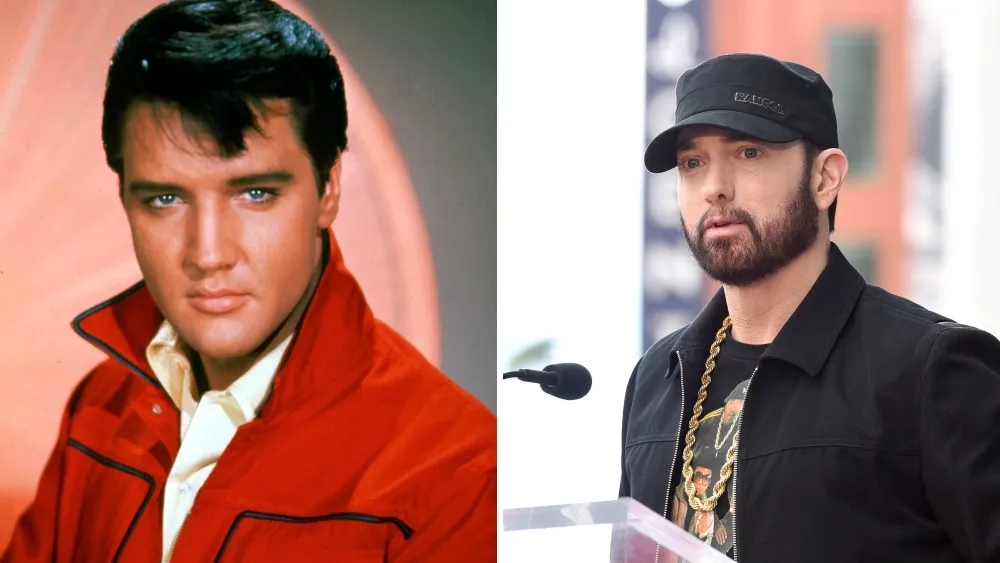
A group of Elvis Presley’s music rights holders and the publisher of many of Eminem’s records have filed sweeping new federal lawsuits against AI music producer Suno; Each party filed separate claims that escalated the AI company’s legal challenges.
The Presley lawsuit, filed against the AI music producer in the Northern District of California by a group that includes Authentic Brands Group, Raleigh Music Publishing and others, accuses the platform of copyright infringement and exploitation of Presley’s identity when Suno users invoke his name when creating new songs. In a 51-page filing, they alleged that Suno violated the Tennessee Likeness Audio and Video Securing Act of 2024 (or ELVIS Act), which prevents AI companies from duplicating singers’ voices without allowing users to create tracks that reflect Presley’s “rich vocal timbre.”
Eight Mile Style, LLC, which controls hundreds of Eminem recordings including “Lose Yourself,” “Without Me” and “The Real Slim Shady,” alleged in its lawsuit that Suno violated its copyright by allowing users to produce songs and lyrics that echo the rapper’s tracks. Eminem is not personally involved in the lawsuit, and the rapper’s representative did not respond to an immediate request for comment.
Lawyers Richard Busch, Mark Block, David Niemierzycki and Andrew Davis, who represented both the Presley group and Eight Mile Style, argued that Suno “mechanically encoded itself with artists’ identities, their hard work, their creativity, and their time, all for a coherent conveyor belt of cash.” Both complaints included several examples of created songs that were either allegedly similar to Presley or produced lyrics that copied Eminem’s work.
“The next Elvis will not be able to pick up a guitar,” lawyers wrote in the Presley case. “Suno’s greedy race to the bottom aims to make human creativity obsolete, coldly copying in seconds without a license what took years to learn, struggle, maintain, and endlessly strive to make better and perfect, posing the question to future generations who will seek to launch an already arduous, uncertain, and not always lucrative creative pursuit: ‘What’s the point?’”
Elements of the Presley case mirror a lawsuit filed by American singer Jason Isbell and other musicians, who alleged in a filing seeking class-action status that Suno’s platform allowed users to exploit their identities. Suno denied these allegations.
Suno did not respond to an immediate request for comment.
The Presley case is the latest test of whether an artist or his estate can use the legal system to protect his name, image and likeness from being used by an AI company without express permission or compensation; This is a fear fueled by artificial intelligence models and deepfakes ever since generative technology has taken over the public sphere. In the Isbell-led lawsuit, plaintiffs argued that the Suno platform allowed users to get around the restrictions by using certain prompts that asked for tracks that evoked an artist’s “tone and phrasing” by using real names instead of stage names (as with rapper Common) or inserting spaces between the letters of their name, among other methods.
“This lawsuit seeks to restore the value of misappropriated identities and stop continued commercial exploitation,” attorney Alan D. Rose wrote in the lawsuit. Suno denied the allegations and told the court there was “nothing illegal” about requesting songs in the vein of an artist.
The lawsuits follow similar lawsuits filed by both parties against Anthropic and Meta, respectively. Authentic Brands Group, along with other Presley publishers, alleged in a federal lawsuit filed against Anthropic last month that AI chatbot Claude was improperly trained on 274 Presley songs, including such iconic tunes as “Can’t Help Falling in Love with You,” “Run On” and “Farther Along.” The band sought damages totaling $48.6 million in exchange for the use of the songs and stopping Anthropic from infringing the rights holders’ copyrights. Anthropic denied the allegations.
Eight Mile Style also sued Meta for nearly $110 million in June, alleging that the Grammy-winning rapper violated his copyright by storing 243 of Eight Mile’s recordings in his Facebook, WhatsApp and Instagram libraries without permission. Meta lawyers called the case “fanciful” in court in June, but a federal judge in Michigan ruled that the case could be discovered.
These lawsuits add to ongoing litigation against Suno, including those from independent music publisher Round Hill Music and major record labels Universal Music Group and Sony Music Entertainment. Warner Music Group settled its lawsuit against Suno last year. Deals with WMG and music publishers BMG and Believe helped power Suno’s label-backed model, the “v6,” released in September. But this model encouraged me another In the lawsuit filed by UMG and Sony Music, the two labels called it “fruit from the same poisonous tree.”
The lawsuits did not affect Suno’s market value. It raised $400 million in a June financing round at a $5.4 billion valuation.